

Inguinal Hernia
Overview
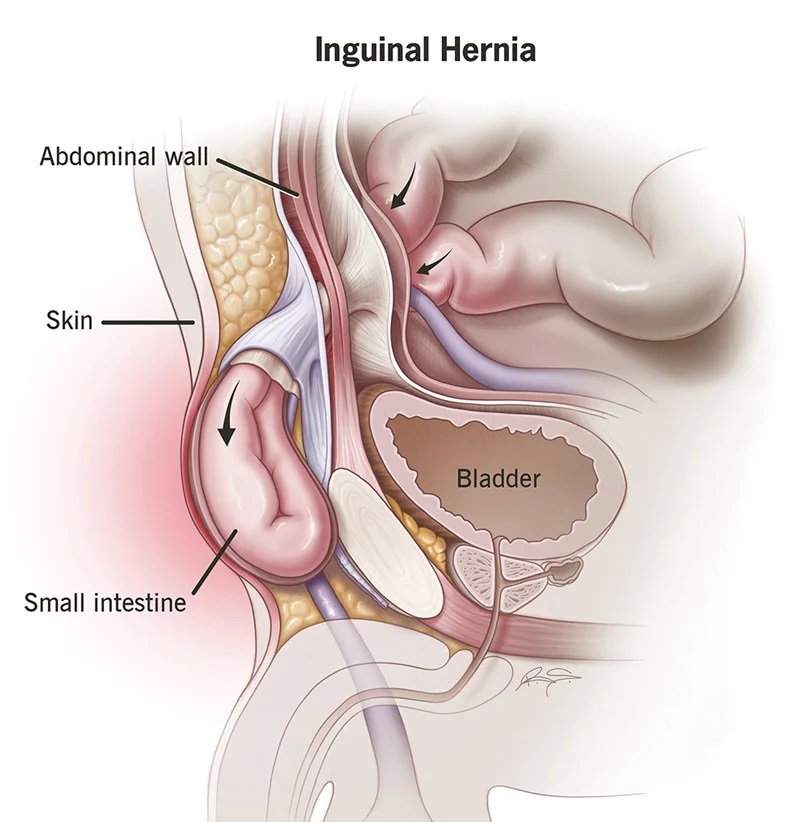
Hernias develop when tissues from one body cavity protrude through an opening in the muscle wall into another area. The most prevalent form of hernia is the inguinal hernia, occurring when abdominal tissue, such as belly fat or a loop of intestines, protrudes through an opening in the lower abdominal wall, which acts as a partition between the abdomen and groin.
Inguinal hernias specifically manifest in the inguinal canal, a passageway running down each side of the pelvis towards the genital region. Commonly known as groin hernias, they derive their name from their occurrence in the groin. Inguinal hernias represent the most frequent type of groin hernia, with femoral hernias being a less common variant that arises in the smaller femoral canal beneath the inguinal canal.
Why it's done
- Inguinal hernias often cause pain, discomfort, and a noticeable bulge in the groin area. Treatment aims to relieve these symptoms, improving the patient’s quality of life.
- If the hernia becomes trapped or strangulated, it can cut off blood supply to the herniated tissue, leading to serious complications. Surgery helps prevent such complications.
- Untreated inguinal hernias may restrict physical activities due to pain and discomfort. Surgery allows individuals to resume normal activities without limitations.
- Inguinal hernias have the potential to grow larger over time. Surgical repair prevents the hernia from progressing and becoming more challenging to manage.
- Certain movements, such as lifting or straining, can exacerbate hernia-related pain. Treatment helps minimize discomfort during daily activities.
- The bulge associated with an inguinal hernia can be visually noticeable. Surgery addresses this cosmetic concern by repairing the hernia and reducing the bulge.
- Surgical repair aims to provide a permanent solution to the inguinal hernia, reducing the likelihood of recurrence.
Risk
- Injury to nearby organs, blood vessels or nerves.
- Bleeding.
- Infection.
- Wound-healing problems.
- Reactions to the anesthesia.
- Blood clots.
- Urinary retention
- Chronic pain
How do I get ready for Inguinal Hernia?
- Schedule a detailed consultation with your healthcare provider to discuss the planned inguinal hernia surgery. This is an opportunity to ask questions, discuss any concerns, and provide information about your medical history.
- Complete any necessary diagnostic tests, such as imaging studies or blood tests, as recommended by your healthcare team to assess your overall health and provide information about the hernia.
- Discuss your current medications, including prescription and over-the-counter drugs, with your healthcare team. Adjustments may be needed, especially if certain medications can affect bleeding or anesthesia.
- Follow any fasting instructions provided by your healthcare team. Typically, you will be asked to refrain from eating or drinking for a specific period before the surgery.
- If you smoke, consider quitting or reducing smoking before the surgery, as smoking can impact the healing process and increase the risk of complications.
- Arrange for someone to drive you to and from the hospital or surgical center on the day of the surgery, as you may not be able to drive immediately after the procedure.
- Wear loose, comfortable clothing on the day of the surgery. Choose items that are easy to put on and take off.
- Bring necessary personal items, such as identification, insurance information, and any documents provided by your healthcare team.
- Follow any specific instructions for showering and skin preparation provided by your healthcare team. Proper hygiene reduces the risk of infection.
