

Humerus Nailing/Plating
Overview
Humerus nailing and plating are orthopedic surgical techniques used to treat fractures and other conditions affecting the humerus, which is the long bone in the upper arm.
The choice between humerus nailing and plating depends on factors such as the type and location of the fracture, the surgeon’s preference, and the patient’s individual characteristics. The orthopedic surgeon will determine the most suitable approach based on a comprehensive evaluation of the specific case.
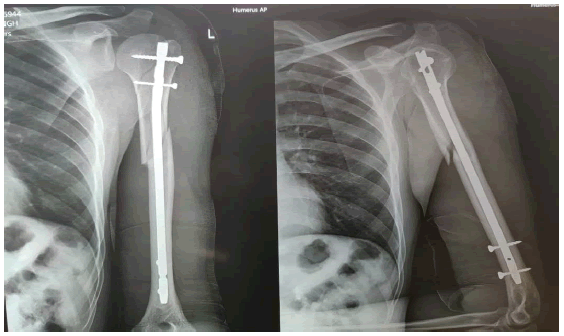
Why it's done
Humerus Nailing/Plating may be recommended for several reasons, including:
Humerus Nailing
- Humerus nailing is often done to stabilize fractures of the humerus. This can include fractures in the shaft (diaphysis) of the bone.
- Nailing is a minimally invasive technique that involves a smaller incision compared to traditional open surgery, leading to potentially faster recovery and reduced soft tissue damage.
- Intramedullary nailing facilitates rapid healing by stabilizing the fracture site and providing a supportive environment for bone union.
- Nailing is particularly suitable for fractures with minimal associated soft tissue damage, as it involves less disruption to the surrounding tissues.
- The technique helps prevent malalignment of the fractured bone by providing stable fixation.
Humerus Plating
- Humerus plating is used to stabilize fractures of the humerus, especially those near the ends of the bone (proximal or distal fractures) or with specific fracture patterns.
- Plating can be employed to correct angular deformities or malalignments in the humerus, restoring proper alignment.
- In certain cases, plating may be preferred to preserve the blood supply to the bone, especially when dealing with fractures near the joint surfaces.
- Plating is suitable for fractures associated with more extensive soft tissue damage where open reduction and internal fixation are necessary.
- Comminuted fractures, where the bone breaks into multiple fragments, can be effectively managed with plates that provide stable fixation.
- Plating allows for a customized approach, and different plate designs can be used based on the specific characteristics of the fracture.
- Plating may allow for early mobilization and weight-bearing in certain cases, contributing to a more rapid recovery.
Risk
Humerus Nailing/Plating can pose potential risks and complications. Some of these include:
- Infection
- Delayed Healing
- Nonunion
- Malunion
- Implant Issues
- Nerve or Blood Vessel Injury
- Hardware Migration
- Soft Tissue Irritation
- Limited Range of Motion
- Implant Visibility
How do I get ready for Humerus Nailing/Plating?
Preparing for Humerus Nailing/Plating involves several steps to ensure a smooth procedure and recovery:
- Schedule a thorough consultation with your orthopedic surgeon. Discuss your medical history, current medications, and any allergies.
- Undergo necessary diagnostic tests, such as X-rays or imaging studies, to provide detailed information about the humeral fracture and guide surgical planning.
- Complete a comprehensive medical evaluation to assess your overall health and identify any pre-existing conditions that may affect the procedure or anesthesia.
- Review your current medications with your healthcare provider. Adjustments may be necessary, especially for medications that affect blood clotting.
- Wear loose, comfortable clothing on the day of the procedure. This makes it easier to change into a gown if necessary.
- Bring necessary personal items, including identification, insurance information, and any documents provided by your healthcare team.
- Avoid wearing makeup and jewelry on the day of the procedure. This helps with the application of monitors and ensures aseptic conditions.
