

Shoulder Arthroscopy
Overview
Shoulder arthroscopy at Indotaj Medical Center in Tajikistan is an advanced and minimally invasive surgical procedure designed for both the diagnosis and treatment of various shoulder issues. This innovative technique is commonly employed to address conditions such as rotator cuff tears or shoulder impingement. Minimally invasive approaches are characterized by smaller incisions, each resembling a keyhole in size, in contrast to traditional surgical methods.
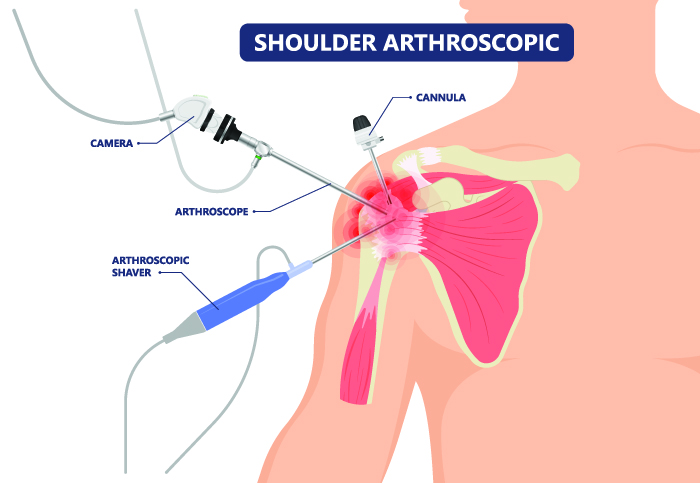
During the procedure, a specialized camera known as an arthroscope is delicately inserted through a small incision in the patient’s skin. This arthroscope transmits high-resolution images of the shoulder joint onto a video screen, providing our medical team with a comprehensive view of the affected area. Our experienced healthcare professionals analyze these images to identify and pinpoint the source of the shoulder injury or ailment.
In cases requiring shoulder repair, our skilled providers utilize miniature surgical instruments through additional small incisions. This precise and targeted approach allows them to restore mobility to the shoulder joint, addressing the identified issues effectively. At Indotaj Medical Center, we prioritize the use of cutting-edge techniques to enhance patient outcomes and promote a faster and smoother recovery process.
Why it's done
- Arthroscopy can be used to diagnose and repair tears in the rotator cuff, the group of muscles and tendons that stabilize the shoulder joint.
- Impingement occurs when the rotator cuff tendons are pinched between the humerus (upper arm bone) and the acromion (part of the shoulder blade). Arthroscopy can be used to treat impingement by removing or reshaping the structures causing compression.
- Arthroscopy is utilized to address instability issues, such as dislocations or subluxations, by repairing damaged ligaments or labrum (cartilage).
- Arthroscopy may be employed to release tight or thickened joint capsule tissues, improving mobility in cases of frozen shoulder.
- Tears in the labrum, a ring of cartilage that surrounds the shoulder socket, can be diagnosed and repaired using arthroscopy.
- Conditions affecting the biceps tendon, such as tendonitis or tears, can be treated through arthroscopy.
- In some cases of shoulder arthritis, particularly when other treatments are not effective, arthroscopy may be considered for joint evaluation and potential debridement.
- Arthroscopy allows for the removal of bone spurs or loose fragments within the shoulder joint that may be causing pain or impeding movement.
- Inflammation of the synovial lining of the shoulder joint can be addressed through arthroscopy.
- Ganglion cysts or other types of cysts within the shoulder joint can be removed arthroscopically.
Risk
- Bleeding
- Infection
- Nerve or Blood Vessel Injury
- Stiffness or Frozen Shoulder
- Persistent Pain
- Blood Clots (Deep Vein Thrombosis – DVT) and Pulmonary Embolism (PE
- Anesthesia Risks
- Incomplete Resolution of Symptoms
- Recurrent Instability
- Hardware Issues
- Allergic Reactions
How do I get ready for Shoulder Arthroscopy?
- Schedule a comprehensive consultation with your orthopedic surgeon to discuss your symptoms, medical history, and the proposed shoulder arthroscopy procedure.
- Undergo necessary diagnostic tests, such as X-rays, MRI, or CT scans, to provide detailed information about the shoulder condition
- Complete a thorough medical evaluation to assess your overall health and identify any pre-existing conditions that may affect the surgery.
- Review your current medications with your healthcare provider. Adjustments may be necessary, especially for medications that affect blood clotting.
- Adhere to any specific preoperative instructions provided by your healthcare team, including arrival times and pre-surgery protocols.
- Wear loose, comfortable clothing on the day of surgery, considering ease of dressing and undressing.
- Bring necessary personal items, including identification, insurance information, and any documents provided by your healthcare team.
