

Total Hip Replacement (THR)
Overview
Total Hip Replacement (THR) is a surgical procedure designed to replace a damaged or diseased hip joint with an artificial joint, also known as a prosthesis. This treatment is often recommended for individuals experiencing severe hip pain, limited mobility, or joint damage due to conditions like osteoarthritis, rheumatoid arthritis, or hip fractures.
Total Hip Replacement is generally considered a highly successful and transformative procedure for those experiencing debilitating hip joint conditions. It significantly improves pain relief, enhances joint function, and contributes to an improved quality of life. Individual experiences may vary, and the success of the procedure depends on factors such as the patient’s health, adherence to rehabilitation, and postoperative care.
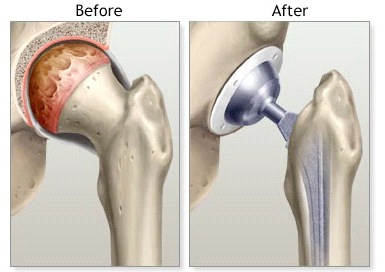
Why it's done
- The most common reason for THR is osteoarthritis, a degenerative joint disease that causes the cartilage in the hip joint to wear away, resulting in pain, stiffness, and reduced mobility.
- Individuals with rheumatoid arthritis, an autoimmune disorder that affects the joints, may undergo THR to address joint damage, inflammation, and pain.
- Severe joint damage and arthritis can develop after hip fractures or injuries. THR may be recommended to alleviate pain and restore function.
- Avascular necrosis occurs when the blood supply to the hip joint is compromised, leading to bone death. THR can be a solution to relieve pain and improve hip function.
- Some individuals may have congenital hip disorders or abnormalities, such as hip dysplasia, which can result in joint degeneration over time. THR may be performed to address these conditions.
- Tumors affecting the hip joint, whether benign or malignant, may necessitate the removal of the diseased tissue and the implantation of an artificial joint through THR.
- Individuals who have undergone previous hip surgeries that did not provide the desired results may undergo THR as a revision procedure.
- Severe fractures of the hip joint, especially in older individuals, may be treated with THR to restore stability and function.
Risk
- Dislocation
- Infection
- Implant Wear and Loosening
- Blood clots
- Nerve and Blood Vessel Damage
- Leg Length Discrepancy
- Heterotopic Ossification
- Persistent Pain
- Allergic Reactions
- Medical Complications
How do I get ready for Total Hip Replacement (THR) treatment?
- Schedule a thorough consultation with your orthopedic surgeon to discuss your symptoms, medical history, and the need for Total Hip Replacement. Your surgeon will evaluate your overall health and the condition of your hip joint.
- Learn about the THR procedure, expected outcomes, and the recovery process. Attend informational sessions, read materials provided by your healthcare team, and ask questions to address any concerns.
- Undergo a preoperative assessment, which may include blood tests, imaging studies (X-rays), and other diagnostic tests to ensure you are in good health for surgery.
- Review your current medications with your healthcare provider. Some medications may need to be adjusted or temporarily stopped before surgery.
- Make necessary lifestyle modifications, such as maintaining a healthy diet, quitting smoking (if applicable), and managing chronic conditions like diabetes.
- Engage in preoperative physical therapy to strengthen the muscles around the hip joint. Improving muscle strength can aid in the postoperative recovery process.
- Achieve or maintain a healthy weight. Excess weight can add stress to the hip joint and affect the outcome of the surgery.
- Learn and practice exercises recommended by your healthcare team. These exercises are designed to improve joint mobility and muscle strength.
- Modify your home environment to ensure a safe and comfortable recovery. This may include installing handrails, securing rugs, and arranging furniture to create clear pathways.
