

Hypospadias Repair
Overview
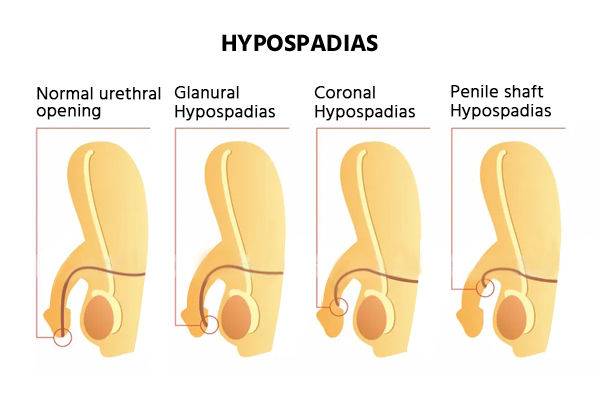
Hypospadias repair is a surgical intervention designed to correct hypospadias, a congenital condition where the urethra, the tube responsible for carrying urine and sperm out of the body, doesn’t properly develop in the penis. This condition results in the meatus (the opening of the urethra) forming at a location other than the typical end of the penis.
In babies with hypospadias, the meatus may form in various locations:
- Near the head of the penis (subcoronal).
- Along the shaft of the penis (midshaft).
- At the junction of the penis and scrotum (penoscrotal).
Hypospadias repair not only addresses the abnormal meatus but may also correct associated conditions such as congenital penile curvature (chordee) and penoscrotal transposition, where the scrotum is positioned above the penis. The surgical procedure aims to reconstruct and reposition the urethral opening for improved functionality and appearance.
Why it's done
- Laparotomy allows surgeons to visually inspect the organs within the abdominal cavity. This may be necessary when diagnostic imaging techniques are inconclusive, and a direct examination is needed to identify the cause of symptoms.
- It is often used for the removal of tumors or masses within the abdominal organs, such as the liver, pancreas, or intestines.
- Laparotomy enables surgeons to take tissue samples (biopsies) from organs or structures within the abdomen for diagnostic purposes.
- In cases of severe abdominal trauma, such as injuries from accidents or penetrating wounds, laparotomy may be performed to assess and repair internal damage.
- It can be used for various gastrointestinal surgeries, including the treatment of bowel obstructions, perforations, or conditions like Crohn’s disease.
- Laparotomy may be performed for gynecological issues, such as hysterectomy (removal of the uterus) or ovarian surgeries.
- In certain cases, laparotomy is used for vascular procedures involving blood vessels within the abdomen.
- Laparotomy might be indicated for the treatment of inflammatory conditions like appendicitis or diverticulitis.
- In emergency situations, laparotomy can be a life-saving intervention when rapid surgical intervention is necessary.
- It may be used to address severe abdominal infections or abscesses.
Risk
- Anesthesia risks.
- Healing problems.
- Infection.
- Mass of clotted blood (hematoma).
- Swelling.
- Bruising.
- Unfavorable scarring or scarring that causes a change in sensation (feeling).
How do I get ready for Hypospadias Repair treatment?
- Schedule an appointment with a pediatric urologist or a surgeon who specializes in hypospadias repair.
- Discuss the details of the procedure, potential risks, and expected outcomes.
- Provide a detailed medical history, including any allergies, previous surgeries, or medical conditions.
- The healthcare provider may conduct preoperative tests, such as blood tests and urine analysis, to assess overall health.
- Inform the healthcare provider about any medications or supplements being taken, as they may need to be adjusted before the surgery.
- Follow specific instructions regarding fasting (NPO, or “nothing by mouth”) before the surgery. This is typically required for a certain period before the scheduled procedure.
- Ensure good hygiene before the surgery, especially in the genital area. A preoperative bath or shower may be recommended.
- If the patient is taking any medications, discuss with the healthcare provider whether adjustments are needed before the surgery.
- In some cases, certain medications may need to be temporarily stopped before the procedure.
- Plan for transportation to and from the hospital or surgical center on the day of the surgery.
- Arrange for someone to accompany the patient, especially if the individual is a child.
- Discuss postoperative care instructions with the healthcare provider, including information about wound care, pain management, and follow-up appointments.
