

Diagnostic Cystoscopy
Overview
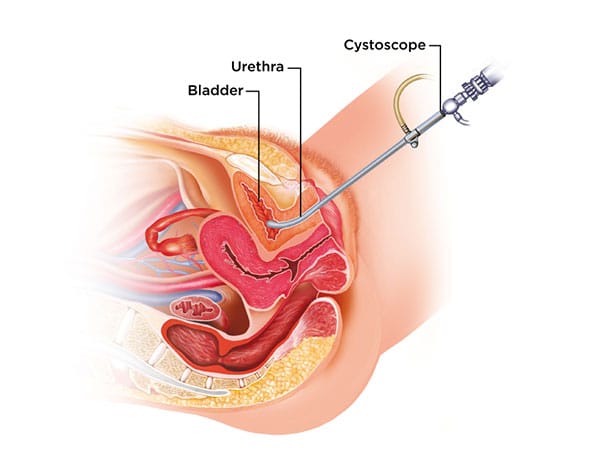
Indotaj Medical Center in Tajikistan offers cystoscopy services to examine the interior of the bladder and urethra. Our skilled urologists, specialized in urinary tract health, conduct this procedure using a cystoscope – a slender, illuminated tube equipped with a camera or viewing lens. Cystoscopy at our center aids in the diagnosis and, when necessary, treatment of various urinary tract issues. The bladder, responsible for storing urine, expels it through the urethra, and our experts utilize this advanced technique to address and manage urinary concerns effectively.
Why it's done
At Indotaj Medical Center in Tajikistan, our urologists employ cystoscopies for the diagnosis and treatment of various urinary tract issues. Cystoscopy is a valuable diagnostic tool capable of identifying conditions such as:
- Bladder cancer or urethral cancer.
- Bladder stones.
- Bladder control problems.
- Enlarged prostate (benign prostatic hyperplasia).
- Urethral strictures and urinary fistulas.
- Urinary tract infections (UTIs).
Our skilled urological specialists use state-of-the-art cystoscopy techniques to accurately diagnose and address these conditions, providing comprehensive care to our patients.
Risk
Diagnostic cystoscopy is generally a safe procedure, but like any medical intervention, it carries some potential risks and complications. It’s important to note that these risks are relatively rare, and the benefits of the procedure often outweigh the potential drawbacks. Some possible risks associated with diagnostic cystoscopy include:
- Bleeding
- Infection
- Discomfort or Pain
- Urinary Retention
- Allergic Reaction
- Perforation or Injury
How do I get ready for Diagnostic Cystoscopy surgery?
To prepare for the cystoscopy, please adhere to your healthcare provider’s instructions. This may involve fasting for several hours before the procedure, depending on the type of anesthesia and the purpose of the cystoscopy. Generally, you will be required to:
- Provide a urine sample on the day of the procedure to check for urinary tract infection (UTI). If an infection is detected, treatment may be necessary before proceeding with the cystoscopy.
- Empty your bladder immediately before the procedure.
- Bring an updated list of medications and supplements.
- Cease taking blood-thinning medications, such as aspirin and warfarin (Coumadin®), after consulting with your provider.
- Inform your doctor if there is a possibility of pregnancy, as regional and general anesthesia can pose risks to a developing fetus.
